Richard Goodall Wins Season 19 of Americas Got Talent as the Singing Janitor Secures the Grand Prize

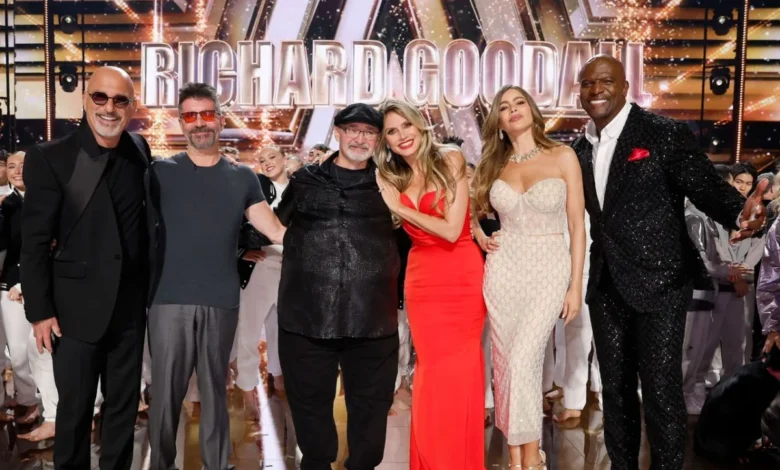
The conclusion of America’s Got Talent season 19 on September 24 marked a cinematic milestone in reality television history as Richard Goodall, a middle school custodian from Terre Haute, Indiana, was officially crowned the champion. The announcement, delivered at the Pasadena Civic Auditorium, solidified Goodall’s meteoric rise from local school hallways to the national stage, earning him the show’s $1 million grand prize and a career-defining platform. Goodall’s victory represents a quintessential American success story, underscoring the enduring appeal of the "everyman" narrative in a competition landscape often dominated by professional performers.
A Journey of Discovery: From Indiana to the National Stage
Richard Goodall’s path to the AGT throne began with an unassuming audition that resonated deeply with both the studio audience and the judging panel. By selecting Journey’s iconic anthem, "Don’t Stop Believin’," Goodall displayed a raw, unvarnished vocal talent that defied his humble profession as a janitor. His performance was so compelling that it earned him the coveted Golden Buzzer from judge Heidi Klum, effectively fast-tracking him to the live shows.
This initial moment of recognition was not an anomaly but the catalyst for a series of high-stakes performances. Throughout the season, Goodall maintained his momentum by selecting repertoire that showcased his emotional range and classic rock sensibilities. His rendition of Michael Bolton’s "How Am I Supposed To Live Without You" during the qualifiers highlighted his ability to handle emotive ballads, while his semifinal performance of Survivor’s "Eye of the Tiger" demonstrated his capacity for high-energy stage presence. By the time he reached the finale, his choice to return to the Journey catalog with a powerful performance of "Faithfully" proved to be a masterful strategic move that resonated with the nostalgic sensibilities of the viewing public.
Chronology of the Season 19 Finale
The finale, held in late September, was a high-production affair that celebrated the culmination of months of competition. The results show served as both a victory lap for the top 10 finalists and a star-studded gala. The evening featured an array of notable guest performances that bridged different eras and genres of entertainment.
The stage at the Pasadena Civic Auditorium saw a fusion of talent as Goodall shared the spotlight with legendary guitarist Neal Schon and members of the band Journey, bringing his competition arc full circle. The event also included appearances by Olympic gymnast Simone Biles and the Gold Over America Tour, pop sensation Michael Bublé, DJ and producer Steve Aoki, comedian Gabriel "Fluffy" Iglesias, the cast of "Magic Mike Live," singer-songwriter Andra Day, and the Detroit Youth Choir. This eclectic mix of talent underscored the scale of the AGT brand, which continues to serve as a primary launchpad for diverse acts in the modern media landscape.
Professional Context and The "Janitor" Archetype
Goodall’s background as a middle school janitor became a central theme of his narrative. Throughout the season, producers highlighted his modest daily life, including his singing for students in school corridors, at local church gatherings, and with a regional band. This "relatable" narrative is a staple of reality competition shows, yet Goodall’s authenticity appeared to distinguish him from other contestants.
For many viewers, his story mirrors the aspirations of working-class Americans, providing a sense of catharsis in a difficult economic climate. His statement following the win—"Simon [Cowell] said two minutes can change your life. It has transformed mine, and I’d like to help others, one song at a time"—reflects a grounded perspective that contrasts with the typical trajectory of sudden reality television stardom.
Judging Panel Perspectives
The judges of America’s Got Talent—Simon Cowell, Heidi Klum, Howie Mandel, and Sofia Vergara—played a pivotal role in shaping the audience’s perception of Goodall. Throughout the season, their feedback served as a barometer for his progress.
Heidi Klum’s support was unwavering from the outset, noting during the finale, "I have faithfully been your biggest fan since the very first moment we met." Howie Mandel’s commentary, "I think you just sang yourself $1 million," underscored the pragmatic nature of the competition, acknowledging that Goodall’s vocal delivery was the primary factor in his financial success. Perhaps most telling was the validation from Simon Cowell, the creator of the format, who remarked, "We all need a hero right now, and you are our hero." This endorsement from Cowell—a judge notoriously difficult to please—provided the final seal of approval for a contestant who had spent his life outside the spotlight.
Broader Implications for Reality Television
The success of Richard Goodall follows in the footsteps of previous champions, such as Adrian Stoica and his dog, Hurricane, who took the title in season 18. The consistency of these wins suggests that the American public remains deeply invested in narratives that prioritize heart, sincerity, and the realization of long-held dreams.
From a broadcasting perspective, America’s Got Talent remains a cornerstone of NBC’s prime-time programming. Created by Simon Cowell and co-produced by Fremantle and Syco Entertainment, the show’s endurance is attributed to its ability to cycle through diverse talent pools while maintaining a familiar, reliable format. The executive production team, led by Cowell, Sam Donnelly, and Jason Raff, has successfully adapted the show to survive the transition from traditional linear television to a multi-platform digital landscape.
The economic impact of an AGT victory is substantial. Beyond the $1 million prize, the winner gains a residency in Las Vegas and a level of national exposure that is difficult to replicate through traditional music industry channels. For a middle school janitor from Indiana, the prize represents not just a financial windfall, but a fundamental shift in professional trajectory.
Statistical and Cultural Impact
Data regarding viewer engagement and social media sentiment throughout season 19 indicates that Goodall’s appeal was broad and cross-generational. His performances consistently ranked among the most-viewed segments on official social media channels, suggesting that his "everyman" appeal traveled effectively across digital demographics.
The inclusion of high-profile guest stars in the finale—from the Detroit Youth Choir to international acts like Michael Bublé—demonstrates the continued relevance of AGT as a cultural bellwether. By blending legacy acts with contemporary viral stars, the production ensures that it remains at the center of the pop-culture conversation.
Conclusion
Richard Goodall’s victory in season 19 of America’s Got Talent serves as a case study in the power of the "overnight success" myth. While his win may have appeared sudden to the casual observer, it was the result of a lifetime of musical preparation, followed by a rigorous, high-pressure competitive process.
As the curtain closes on another season, the industry will be watching to see how Goodall leverages his new platform. Whether he chooses a career in music, public speaking, or community outreach, his story has already achieved its primary objective: providing a moment of genuine inspiration for a global audience. For the producers at NBC and the creators at Syco Entertainment, the season reinforces that despite the complexities of the modern media landscape, there remains a fundamental, unwavering audience appetite for the intersection of talent and the American dream.
As Goodall steps into his future, the legacy of season 19 will be defined by his transition from the hallways of a middle school to the grand stage of the Pasadena Civic Auditorium, a journey that has proven, once again, that talent can emerge from the most unexpected places. With the $1 million prize and the endorsement of the industry’s most critical voices, Goodall is poised to transition from the "singing janitor" into a figure of genuine public interest, proving that for those who continue to "hold on to that feeling," as the lyrics of his signature audition song suggest, the dream is never truly out of reach.